How To Measure: A Comprehensive Guide to Accurate Body and Garment Measurements
18.04.2024
Corporate
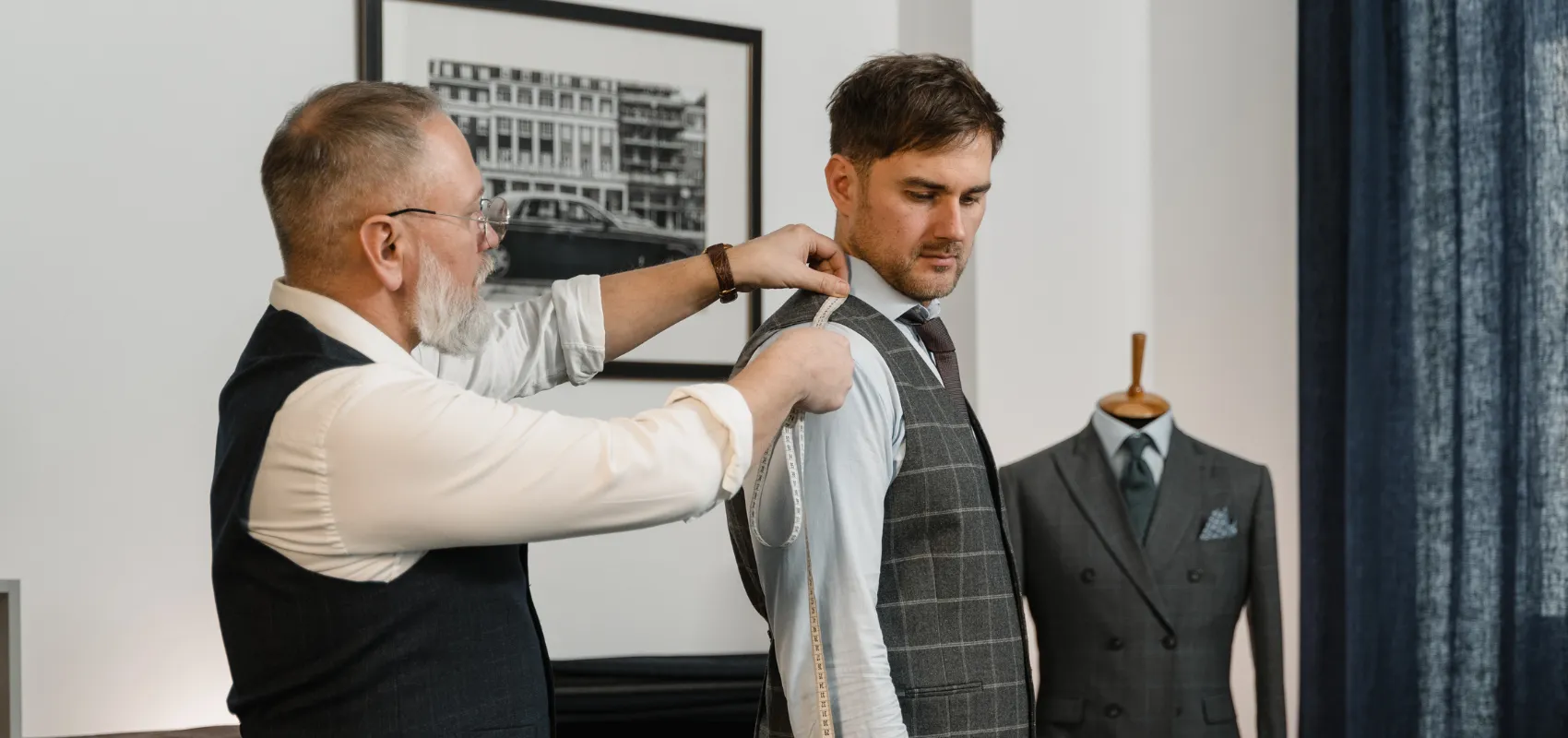
At Total Image, we believe that finding the perfect fit is crucial for a professional and stylish uniform. Knowing your measurements guarantees a size that will fit comfortably. Total Image provides a comprehensive How To Measure guide to assist you through the process of taking precise…
At Total Image, we believe that finding the perfect fit is crucial for a professional and stylish uniform. Knowing your measurements guarantees a size that will fit comfortably. Total Image provides a comprehensive How To Measure guide to assist you through the process of taking precise body and garment measurements, and help you understand how to apply these to a size chart.
Master precise measurement techniques to get the perfect fit without fail using Total Image’s “How To Measure” guide.
Check out our “How to Measure” video.
WHAT YOU WILL NEED
In order to get started you will require some equipment at the ready. This includes:
- Tape Measure – Preferably a fabric tape measure that can shape to your body seamlessly.
- Pen & Paper – To record your results.
- A Friend (Optional) – Measurements can still be precisely recorded alone.
HOW TO MEASURE
BODY MEASUREMENTS
Body measurements refer to the dimensions of a person’s body, for example, the circumference of a person’s waist. As men and women naturally have different builds, there are small variations on how best measure certain body parts.
Females
Bust: Measurements should be taken at the fullest part of your bust. It is important to remember to keep the measuring tape level and straight. Your arms should be in a relaxed, natural position. Don’t pull too tightly as we are looking for a natural fit that allows ease and mobility when performing daily tasks.
Waist: Waist measurements are taken around the narrowest part of your waist between your ribcage and hips. Measure around your natural waist, that is where the bend is at your side. A quick way to locate your natural waistline is to stand in front of a mirror and bend to the side. The crease that appears is the location of your natural waist.
Hips: Keeping your measuring tape straight and aligned, hip measurements should be taken around the widest part. Measure around the fullest part of the hips, while standing naturally, legs placed together.

Males
Neck: Neck measurements are taken around the base of your neck, where your neck and shoulders meet, or the collar level. It is important to make sure that your head and chin are in a natural position and to leave about two finger spaces for a comfortable fit.
Chest: For men, chest measurements are taken around the area of your pecs. Stand naturally, measure around the fullest part of the chest, keeping the tape under the arms and around the shoulder blades.
Waist: Male waist measurements are taken where your pants sit on your waist. Wrap the measuring tape around this area remembering to relax the upper body, ensuring the tape measure is snug but not pulled too tightly.

GARMENT MEASUREMENTS
Alternatively, garment measurements refer to the dimensions of a flat item of clothing. Ensuring that your garment is laid flat is vital to guaranteeing precise measurements. Avoid warped or extremely wrinkled garments as these can alter your results.
Shoulder: First lay the garment flat and face down. Measure across the shoulder seam from one outer edge to the other using a flexible measuring tape. Ensure the tape follows the natural curve of the shoulder without being too tight or loose.
Bust/Chest: When measuring the bust of a garment, lay it flat, face up and measure across the fullest part of the chest. This point is typically located 1-2 inch under the arms.
Waist (Male): Male waist measurements are taken where your pants naturally sit on your waist. For a precise fit measure across the top of the pants where the waist band is.
NOTE: Men’s waist sits at a different position to a ladies.

Hip:To measure the hip of a garment, lay it flat and measure across the fullest part of the hips, usually around the widest point of the buttocks. Make sure the tap is straight and parallel to the bottom hem of the garment.
In Leg:The In leg or inseam of a garment is a key measurement to determine the length of trousers. To measure this garment accurately, lay it flat and measure from the crotch seam down the inner leg to the bottom hem. Record this measurement to determine the length of the garment’s leg.

FINDING YOUR SIZE
Now that you have taken and recorded your measurements, is important to understand how to read a size chart to find your perfect size. Keep in mind that sizes can differ between different suppliers and even from style to style, so always refer to the specific size chart of the garment you wish to purchase.
HOW TO UNDERSTAND SIZE CHARTS
Size charts will appear in either full or half measurements.
Full measurements refer to the complete circumference or length of a body part or garment. For example, a full bust measurement is the entire circumference of the chest or bust area.
Half measurements are typically half of the full measurement. For instance, a half-bust measurement will be half of the full bust circumference, usually measured from one side of the garment or body to the other.
In between sizes?
If you’re between sizes, it is important to refer to the size chart and consider the garment’s fit and style. It’s also important to take into account your personal preference for how you want the garment to fit.
For example: If your 1/2 chest measurement is 52cm, and the size 8 corresponds to 51cm, while size 10 corresponds to 53cm, the best fit for you is likely be size 10. This will ensure the garment accommodates your chest comfortably without feeling too tight. However, it’s also essential to consider the fit style of the garment; for example, if it’s a stretchy material or has a relaxed fit, you might find that size 8 still fits well despite being slightly smaller than your measurement. If possible, try on both sizes or check customer service for sizing guidance specific to the garment, to help make the best choice.
With Total Image as your guide, shop confidently for uniforms that will provide a new level of comfort and style.
Contact Total Image for all your uniform requirements.
Enquiries
EOFY Uniform Ordering: Why Now Is the Best Time to Plan Ahead
EOFY is the perfect time to rethink your uniform program The end of financial year is more than a time to close off budgets and tidy up paperwork. It is the perfect opportunity to look ahead, review what your team needs, and make sure your uniform program is working as hard as it should. Because

The Most Common Uniform Mistakes (And How to Fix Them)
Quality shouldn’t hold a team back, yet when corners are cut in uniform design, the impact is felt across both people and brand. What should empower staff throughout their workday can instead lead to inconsistency and frustration when uniform quality issues are overlooked. With over 20 years of custom uniform expertise, Total Image understands what it takes to get it right. By breaking down the most common uniform problems and how to fix them, this guide highlights the key considerations for

What Should a Uniform Include?
There’s more to a well-designed uniform than what meets the eye. From developing concepts that work as hard as your teams to ensuring consistency and support throughout rollout, it can be difficult to understand what a company uniform should include. As experts in custom uniform design, Total Image…
Beat the Chill with Smart Winter Uniform Updates
As the temperature drops, so does the tolerance for unfit uniforms. Cold mornings, darker days, and unpredictable weather can quickly expose gaps in a uniform program, and when staff feel it, so does the business. When employees are not properly equipped for changing weather conditions, discomfort…